
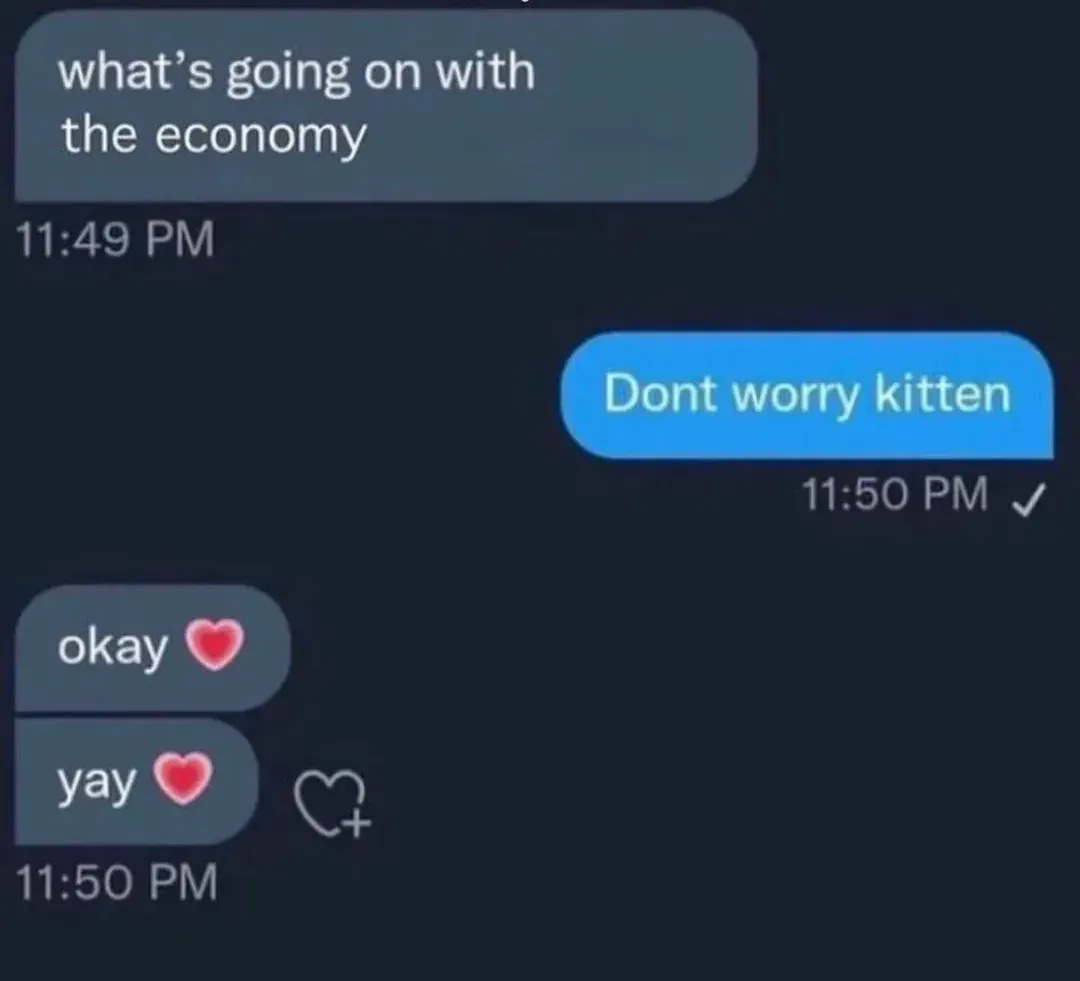
Don't worry kitten
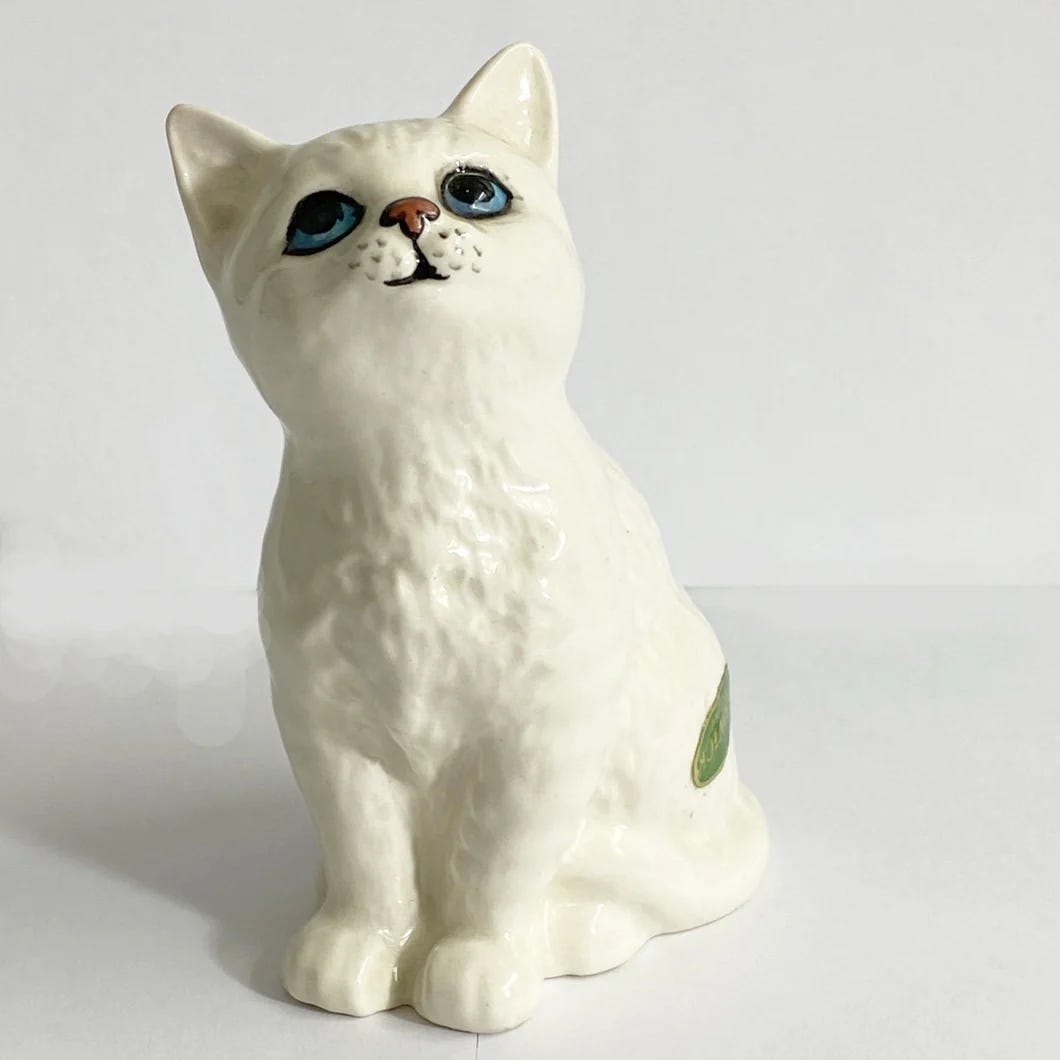
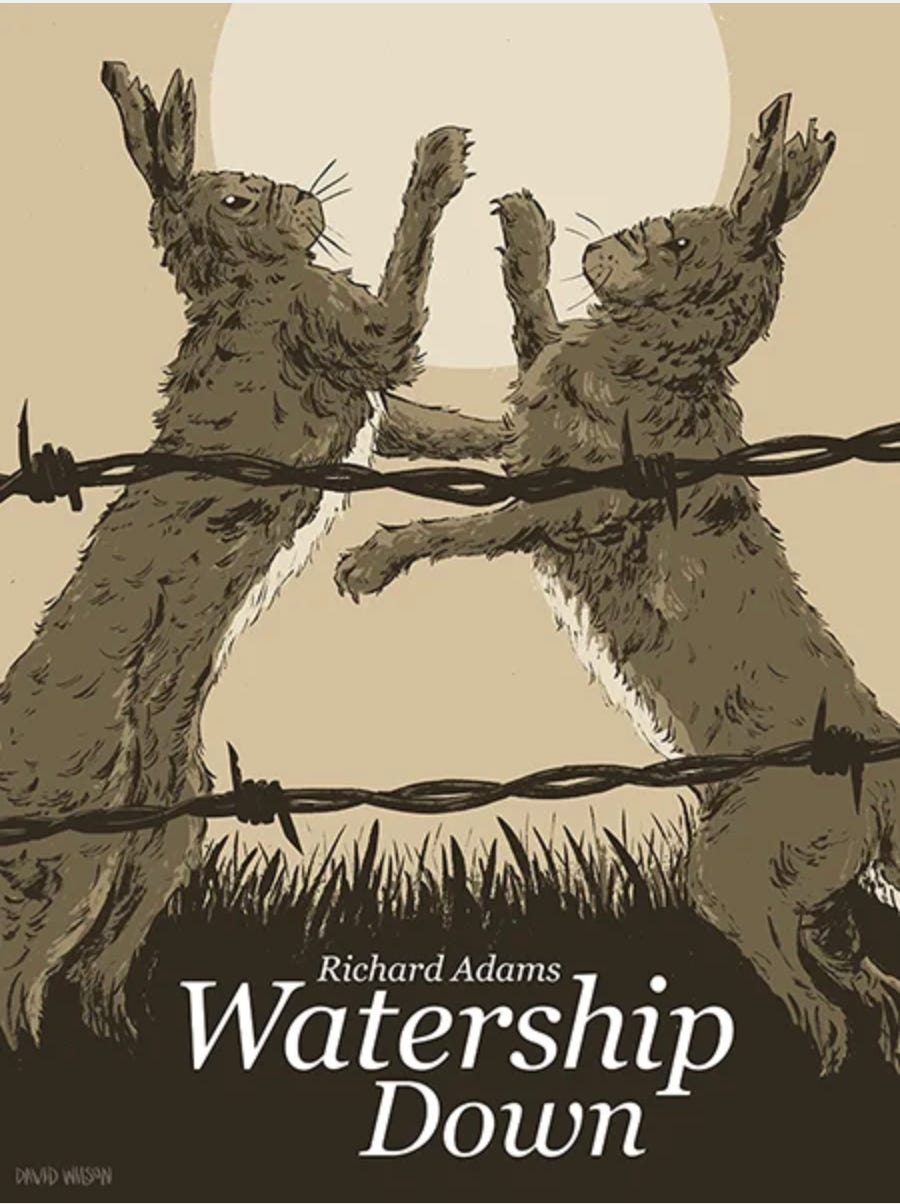
This week I saw a meme of a ceramic kitten with the caption “abolish ICE” and it felt enragingly emblematic of the current iconography of babyfication: the desire to present as unequivocally innocent in the fight for justice. Not just a baby animal, but a fragile white toy baby animal, with smooth ineffective ceramic claws, the kind that little girls collect at the age when they are most obsessed with tiny, cute, decorative things. Not Mary Oliver’s soft animal, who does not need to be good, but a shiny, hard, fragile animal. I saw a meme of illustrated woodland creatures living in harmony, under pseudo-educational captions about the trauma of state-sanctioned violence and systemic oppression, as though every woodland creature experiences drought or forest fires the same, as though there are no predators in the woods, no hierarchies or symbiotic relationships, only innocents living in a Beatrix Potter book, not even the more realistic violence and politics of Watership Down or Redwall.
It has been a season of babygirls in culture. Guillermo del Toro knew what he was doing when he cast Jacob Elordi, with a face so sweet SNL made a skit about how he was “babygirl”, as the monster in Frankenstein. A man whose height is never cast as a threat, playing the ultimate 7-foot-tall babygirl, a creature built from the discards of war and the hubris of science and born innocent, devoted to his own education, finding human connection, and preventing his creator from causing further harm. As Mary Shelley writes in the book, “I was their plaything and their idol and something better - their child, the innocent and helpless monster bestowed on them by Heaven." The film is strewn with imagery of swaddling, from the mummiform Fisk coffins, wrapping the dead one's face in metal folds, to the monster’s bandages, to Elizabeth’s flower-filled bonnets.

In the Heated Rivalry fandom, Shane Hollander is forever babygirl because he bottoms in bed, even though by the culmination of Season 1 he is hosting his lover, in a private cottage he had built to his specifications, proposing multi-year dual-track career goals, a PR plan, an immigration plan, and co-founding a charity. In the real world, T Boy Wrestling, a trans male WWE-style touring wrestling show, shut down over accusations of financial malfeasance and accusations of an unsafe environment, prompted a wealth of jokes and apt commentary on the eternal peter pan-ness of identifying with the transitional adolescence as a (lost) “boy”, but never a responsible grown man.
At a moment when even a white, male, ICU nurse at a veteran’s hospital with an open carry license can be killed by ICE, one of the worst white urges is to want to be so helpless and obviously unthreatening one cannot be held responsible for one’s actions or inactions, cannot be targeted by or subject to secondary state violence. I’ve read posts calling Renée Good’s killing the dividing line after which we learned that whiteness will no longer protect us, as thought whiteness has ever been anything but conditional on the correct behaviour and company.
I’ve seen online mental health educators calling for people to protect their peace by disengaging from the news, without recognition that not needing to self-inform is a privilege afforded to those least impacted. It is the epitome of the 2021 “don’t worry kitten” meme template. Don’t worry kitten, your ceramic claws will not be seen as a threat, if you close your eyes you won’t be scared. As Dr. Lucia Lorenzi joked to me recently, “call the asylums, call Freud, the girls are infantilizing themselves again”
In Scaachi Koul’s Sucker Punch, she writes “maybe my marriage would have fared better had I noticed that I’d let my husband become my babysitter….our dynamic was a May/December one, but not necessarily because of our ages. Early on, we quietly agreed that he was the grown-up. My name was never on a lease. I didn’t set up our gas bill. Our cell phones were on a family plan which he paid for both of us. The internet account was in his name. He knew how to fix the loose knob on our stove. He set up my banking and investments to his taste….In all my time with him, I had just been pantomiming adulthood. I don’t know if he liked being the grown-up in the room or if he just accepted his fate, based on my own inertia. But I was never an adult. I was never an equal partner”.
I loved this book, and this is in no way meant to be a commentary on her marriage or career (one of the most adult things one can do as a creative is get enough distance from events to write about them honestly and beautifully), but this chapter on the Lolita-ness of it all has stuck with me all week as a depiction of what it means to be the adult, who gets to opt out of the responsibilities and decisions of adulthood, who gets to fuck around and find out, and the way that overlays onto the capitalist structures of spousal and familial safety nets.
I have been trying to unpack why babyfication drives me nuts. Why I wince whenever I see an online adult support group advertised for “trauma babies”, whose adverse experiences left them perpetually healing their inner child ala Victor Frankenstein. Or when neurodivergence is packaged online as a “failure to adult”, in which burnout is no longer a WHO-defined occupational phenomenon but a product of not honouring the disparity between ones’ true needs and nature and the obligations of adulthood, healed by prioritizing yourself and retreating from collective responsibilities and commitments.
When I first got sick with Long COVID and went on leave from work, my ex ended our relationship with a speech about needing a responsibility-free hot vax girl summer, in which she did not need to consider other people’s immunological vulnerabilities or economic risks. Not just the handing off of interpersonal responsibilities after a pandemic year of collective caregiving amongst our queer family, but a retreat out of adulthood and back into girlhood.
I’ve written elsewhere about the over-responsibilization of patients who must self-diagnosis and self-advocate, the use of self-managed lifestyle interventions over medication, post-viral illness as punishment for viral exposure, how this creates patients who take the first diagnosis they get and blame themselves for their ill fortune. But much of historic disability advocacy was fighting to be considered a responsible adult with equal rights and voice (“nothing about us without us”).
Until 1993, the Canada Elections Act excluded from voting "every person who is restrained of his liberty of movement or deprived of the management of his property by reason of mental disease”, a change that took five years after the Federal Court of Canada declared the provision invalid for conflicting with Section 3 of the Charter of Rights and Freedoms, and 12 years after the the House of Commons’ Special Committee on the Disabled and the Handicapped recommended amending the Act in 1981. We fought for social, educational, and economic inclusion, access to information in formats that were accessible, and for the power over our own health decisions. We fight still, for access to medical treatment beyond exercise or sleep or hot baths or therapy.
But we cannot fight present day injustices and state violence, we cannot show up for our communities, cannot self-advocate at the doctor’s office, if we duck adult responsibility, like a children’s army, or cartoon animals, or kittens who do not need to understand how world works and our roles and power in it.